


ESG is no longer an optional talking point, but it has now become a defining part of how people evaluate a company. The global Environmental, Social, and Governance (ESG) funds were losing in early 2025, so investors in Australia and New Zealand added over US$300 million to ESG-focused funds. That shows people still care, want to see results, and want honest communication.
There’s more pressure than ever for companies to explain what they’re doing. Nearly half of CEOs say they feel the weight of expectation when it comes to communicating their ESG performance. But getting the message right isn’t always easy. Say too much, and you risk being accused of greenwashing. Say too little, and people wonder what you’re hiding.
Many companies already have the numbers and good intentions, but the message often falls flat. Some are stepping away from the term “ESG” entirely, choosing words like “sustainability” or “responsible business” instead. But switching the label doesn’t fix the bigger issue. What matters is the message should be real, clear, and consistent.
This guide breaks down what ESG communication really means and how to do it well. It looks at how to find the right voice, connect it to business goals, and build trust without getting lost in corporate buzzwords.
What is ESG Communication?

In ESG communication, a business explains its efforts to improve its impact on society, the environment, and corporate governance. So that people may see both the words and deeds of a corporation, it often includes both narratives and statistics.
On the environmental side, this could mean updates on energy use, emissions, or waste reduction. Social efforts might include employee well-being, diversity, or support for local communities. Governance focuses on leadership practices, ethics, and transparency.
People sometimes compare ESG to corporate social responsibility (CSR). While they share similarities, ESG takes a more comprehensive approach. It’s not just about doing good, but showing progress, tracking impact, and being able to prove it.
Why ESG Communication Matters in Corporate World
How a company communicates its ESG efforts has never been more important. In some regions, like the U.S., ESG has become a politically sensitive topic. That’s led some companies to adjust their language, referring to updates as “sustainability” or “business impact” reports instead. The goal is to stay transparent without triggering public backlash.
At the same time, there’s a growing trend called greenhushing. This happens when companies reduce how much they share about their ESG work, not because they’ve stopped doing it, but to avoid criticism. This is understandable, but going quiet creates new risks, and stakeholders want honesty. People are paying attention to how companies show progress, not just talk about it.Good ESG communication also helps the business. It makes it easier to attract investors, keep employees happy, and stand out in the market. Clear, honest updates show the company is not just talking but actually doing the work.
12 Tips for Mastering ESG Communications
Talking about ESG efforts isn’t only about putting out a yearly report anymore. It means showing your progress regularly, being open about challenges, and making sure your message stays consistent. The goal is to build trust and keep people informed along the way.
Here are 12 simple and practical tips to help companies tell their story with more impact. If your company wants to communicate ESG in a way that sticks, these practical steps are a great place to start.
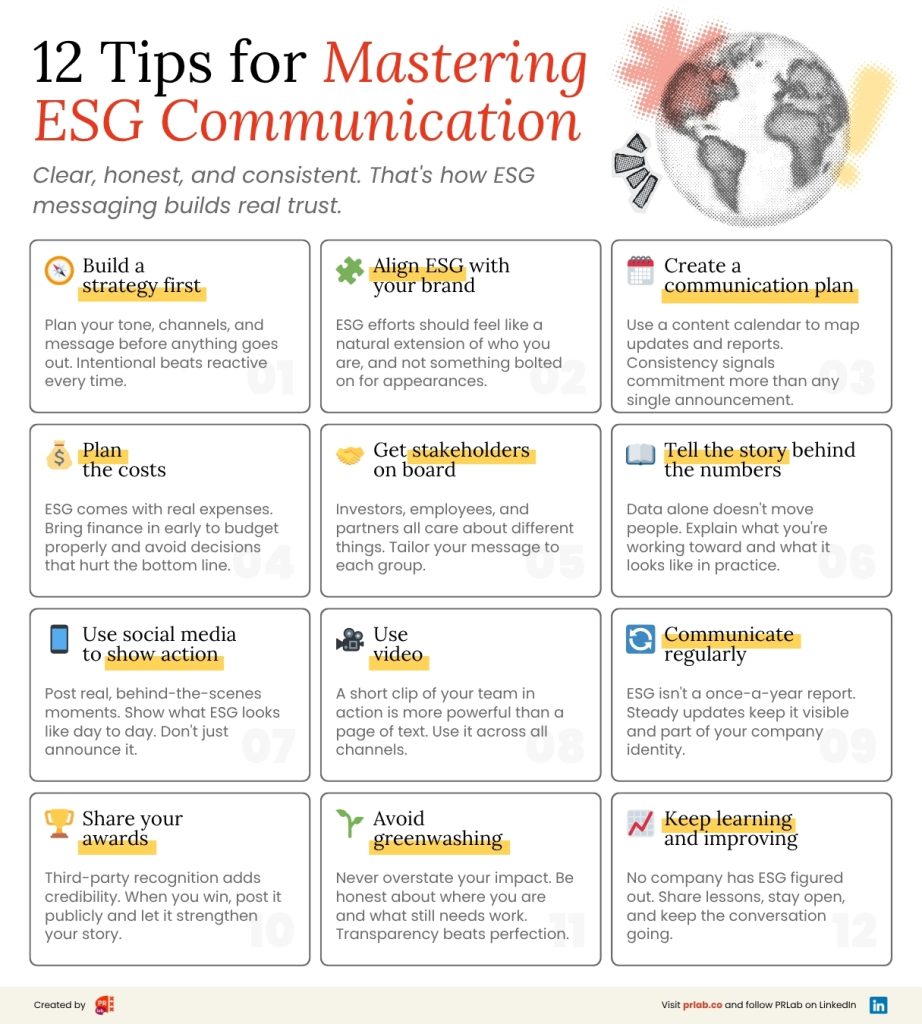
1. Decide on an ESG Communications Strategy
Every company working on ESG should start with a solid communications strategy. That means thinking through the tone, the channels, and the message. Is it better to lead with numbers and reports? Or should the approach focus more on stories and visuals? There is no one-size-fits-all, but the strategy should feel intentional.
A good strategy includes planning for things like investor updates, press outreach, and stakeholder engagement.
For example, a company might release quarterly ESG briefs, hold Q&A webinars, or use LinkedIn to highlight progress on climate goals. When everything’s planned out, ESG messaging becomes part of how the company communicates overall, not just an extra task.
Learn more about internal communications strategy
2. Ensure Your ESG and Brand Story Align
Your ESG initiatives should appear to be a natural extension of your brand, rather than an unrelated addition or something that feels forced. If your organization emphasizes innovation, for instance, then your ESG work should promote innovative ideas like using new technology to lower carbon emissions.
ESG goals give your brand story more depth. If your mission is about health and wellness, then highlight stories like employee wellness programs or partnerships with local clinics. This kind of alignment makes the ESG story stronger. It shows that values aren’t just slogans, but they show up in real decisions.
If your brand values transparency, don’t just share the wins, share the setbacks, too. Publishing raw data, executive pay ratios, or the lessons learned from ESG projects that didn’t go as planned can actually strengthen trust.
Learn more about brand storytelling
3. Create an ESG Communication Plan
To keep ESG efforts visible and consistent, it helps to build a simple communication plan. This could be a content calendar with key dates for updates, like when to post on LinkedIn, when to publish your annual ESG report, or when to send investor emails. The goal is to stay consistent so stakeholders know what to expect.
It also helps to set a regular timeline for gathering data and reporting progress. That way, you’re not scrambling for numbers or updates at the last minute. Even short monthly updates can go a long way in showing steady commitment.
Finally, decide who’s in charge. It could be your sustainability officer, or it might be a small team composed of members from various departments. They’ll need access to real data and support from leadership to keep things moving. When roles are clear, ESG communication becomes a routine, not a scramble.
4. Plan Costs
Sustainability is important, but so is staying financially smart. Some companies assume that adding ESG to their mission will immediately boost profits, but that’s not always the case. ESG efforts often come with real costs, like new materials, audits, or added labor, and if those costs aren’t managed well, they can hurt your bottom line.
That’s why it’s important to build ESG into your budget from the start. If your ESG initiatives improve product quality or make your brand more attractive, that’s a win. But if they only increase costs without a clear benefit, you risk falling behind more efficient competitors.
Make sure finance teams are part of the planning process. They can help estimate costs, forecast benefits, and spot risks before they become problems. Although ESG is a long-term strategy, it still requires short-term financial discipline.
5. Get Stakeholders on Board
ESG communication works best when it includes more voices, not just leadership. Employees, for example, can be great ESG storytellers. They already share their work lives on social media, so why not give them real stories to tell? It makes your ESG efforts feel more personal and authentic.
It also helps to understand what different stakeholders care about. Investors might want performance data, like emissions, board diversity, or supply chain risks. Employees may be more interested in inclusion, purpose, or company culture. Stakeholder mapping can help tailor your message to the right audience.
Internally, teams like investor relations, marketing, and communications should stay aligned. Using shared frameworks like GRI or SASB keeps everyone on the same page. When teams work together, your ESG message becomes clearer, stronger, and more consistent.
6. Showcase Your ESG Story
When people look for your company’s ESG information, they’re not just scanning for stats, they want to understand what you stand for. That’s why it’s worth taking the time to tell the story behind your goals. What are you working toward, and why does it matter?
It is also helpful to show what ESG looks like beyond your office walls. Are you working with suppliers on clean energy? Sourcing materials ethically? Highlight those partnerships and share quick stats, photos, or visuals to support the story.
Just keep it honest, as overstating your impact can backfire. Even if you're still figuring things out, people value transparency.
7. Use Social Media to Show in Action
One fast and efficient approach to live up to your ESG communication is social media. Simple articles like pictures of a team helping or a quick update on new environmentally friendly packaging might help your audience to connect with you more strongly. It demonstrates your company's activities rather than only what it claims.
You can make a significant impact by sharing a weekly post that highlights a small win or provides a behind-the-scenes look at sustainable practices.
If your product uses less plastic now or your warehouse runs on solar, share it. Clear, honest updates like these help people connect with your mission, and they’re just as valuable for small businesses as they are for big brands.
Learn more about using social media PR
8. Use Video
Video helps people see what ESG really means. A short clip of your company reducing waste or supporting local schools can be more powerful than a page of text.
Use video across channels, your website, LinkedIn, Instagram, and even internal meetings to show what progress looks like in practice.
You can take different approaches. A mini-interview with team members adds authenticity. An animated video can help explain complex data, like your carbon footprint or governance structure. Drone footage of a green facility? That works too.
9. Regularly Communicate About Projects
ESG isn’t something you post about once a year but a long-term journey. That’s why regular updates matter. Create a section on your website just for ESG, with space for articles, reports, team stories, and project updates. If your company reduced water use or launched a diversity program, share what happened and what you learned.
Use a content calendar to map out when and where you’ll post monthly blog updates, case studies, or quotes from leadership. Align your updates with global reporting seasons or sustainability events.
When ESG stays visible throughout the year, people start to see it as part of your company’s identity, not just a trend.
10. Show Off Your Awards
Winning an ESG-related award is proof that your efforts are working and being recognized by credible third parties.
If it’s a local sustainability award, a national diversity honor, or a spot on a “Best Workplaces for the Environment” list, these wins add weight to your ESG story. They also boost morale internally, showing employees that their contributions are making a difference.
Share these moments publicly. Post on LinkedIn, tag the awarding body, and explain what the award was for and why it matters. Awards can be great for attracting talent, impressing investors, and showing clients that you’re not just talking the talk, you’re getting real, measurable results.
Learn more about award announcements press release
11. Avoid Greenwashing at All Costs
Greenwashing happens when companies make ESG claims that don’t match reality. It might be exaggerating results, using vague language, or avoiding the full picture. It’s tempting to make bold claims, especially under pressure to “look green,” but it’s a major risk.
The better approach is simple: be honest. If your progress is still in early stages, say so. Share real numbers, explain your process, and talk about what still needs work.
In ESG communication, transparency always beats perfection. Over time, people trust what they can verify, not what sounds the best.
12. Learn, Share, and Keep Improving
No company has ESG all figured out, and that’s okay. What matters is being open about the process. Sharing lessons learned, even the ones that came from mistakes, shows that the company is serious about improving. It also encourages conversation and creates space for others to share their insights, too.
Joining ESG communities, industry groups, or webinars can be a smart way to stay sharp. These spaces offer new ideas, tools, and peer examples to learn from.
If it’s a creative solution from a small business or a new reporting method from a global firm, staying curious helps keep your ESG communication relevant, credible, and future-ready.
Key Obstacles Companies Face in ESG Communications
Even when companies are serious about sustainability, their ESG communication doesn’t always land. Messaging can become inconsistent, unclear, or overly cautious. It’s easy to see why between shifting regulations, rising public expectations, and the fear of being accused of greenwashing, keeping communication on track is no small task.
Here are the most common obstacles companies face:
1. Struggling to Collect and Manage ESG Data
Before companies can share ESG progress, they need a reliable data, and that’s often the hardest part. Unlike financial data, which tends to live in one system, ESG information is scattered.
Some of it typically show up in:
- Energy use might be tracked at headquarters, but not in remote locations
- HR data may live in one platform, while supply chain metrics sit somewhere else
- Stories about impact or community efforts aren’t usually tracked in a standard format
That’s why many companies turn to ESG data tools to bring everything into one dashboard. These platforms help teams report things consistently, using the same rules and formats.
Without a system like this, companies risk sharing outdated or incomplete information, which can hurt credibility with investors and regulators.
2. No Single Framework to Follow
The lack of a single, uniform ESG framework presents still another typical difficulty. Companies often juggle multiple frameworks like GRI, SASB, TCFD, and those systems don’t always align, especially when teams work across regions or stakeholder groups.
This creates friction across ESG efforts like:
- One framework may focus on financial materiality (SASB)
- Another may prioritize stakeholder impact (GRI)
- Regulatory frameworks like CSRD add legal complexity
Until a global standard becomes widely accepted, ESG teams will continue to juggle multiple requirements and duplicate work just to meet expectations.
3. Unclear on What Actually Matters
Not every ESG issue applies to every company. That’s where materiality comes in, to identify which topics are most relevant to the business and the people it affects. To make ESG communication more focused and meaningful:
- Conduct a materiality assessment
- Involve employees, customers, investors, and suppliers
- Prioritize topics like data privacy, DEI, or carbon emissions based on actual business impact
A materiality assessment helps companies make that call. It usually involves asking employees, customers, investors, and even suppliers what they care about most. The result? ESG efforts and reports that are more focused, more meaningful, and actually tied to the real world.
4. Trying to Meet Everyone’s Expectations
Getting ESG messaging right is challenging. Say too much, and someone may accuse you of greenwashing. Say too little, and they may believe you are hiding something.
One of the toughest tasks in delivering your message is that balancing act.
To avoid missteps:
- Be transparent about both wins and ongoing challenges
- Use real data to support your claims
- Focus on consistency across reports, press releases, and campaigns
For instance, if you reduce your emissions by 10%, please demonstrate how you achieved it, share the data, and outline the next steps. That kind of open, data-backed storytelling builds real trust over time.
5. It Feels Like Too Much to Cover
ESG spans everything from climate metrics to ethical sourcing, governance, safety, and DEI. Especially for smaller teams, the sheer scope can be overwhelming.
Instead of trying to do everything:
- Prioritize ESG areas that have real business relevance
- Start small with consistent, focused updates
- Build capacity over time with better tools and internal alignment
A focused, well-executed report with real insights is far more effective than one that tries to do too much and loses clarity.
6. Verifying ESG Data Can Be Complicated
To earn credibility, ESG data should be verified by a third party, what’s known as assurance. This helps prove that your claims are accurate, and it’s increasingly expected by investors, partners, and regulators.
But assurance isn’t free:
- It takes budget, time, and early planning
- You’ll need clean data and clear documentation
- Without it, your reports may be seen as less trustworthy
But the payoff is big. Verified reports boost your credibility and reduce the risk of getting called out for greenwashing or errors.
The Role of PR and Marketing in ESG Communications
PR and marketing teams are key to making ESG communication work. They turn complex sustainability goals into clear stories people can understand. For example, if a company switches to renewable energy, PR might write a press release, while marketing shares the story on social media with real visuals.
PR and marketing teams are in charge of building the bigger picture. They also build the ESG story. A good example is Unilever, which ties its products to its “Sustainable Living” mission. PR shapes the message, and marketing spreads it across PR campaigns, websites, and ads to keep everything consistent.
Another big part of their job is talking to different groups. Not everyone cares about ESG in the same way, so PR and marketing adjust how they communicate depending on who they’re talking to. Investors might want a detailed report, while customers prefer short, visual stories.
When there’s a problem, like an ESG controversy, PR handles the response and helps protect the company’s reputation. Marketing supports by showing long-term progress and reinforcing the company’s values. Together, they make sure ESG communication builds trust, not confusion.
Learn more about difference between PR and marketing
What's Next for Your ESG Communications?
Getting ESG communications right is not a one-time task. As your company grows, so will your impact, and your storytelling should grow with it. The more open, consistent, and thoughtful you are in how you share your ESG efforts, the more trust and connection you’ll build with your audience.
Looking to take things a step further? Check out our guide on how to create a PR strategy for tips on building a strong foundation for all your communications. If you’re ready to partner with PR experts who can help you craft authentic, strategic messaging, visit our ESG PR Agency page to learn more.
Let your values lead, and let your message reflect them.


